

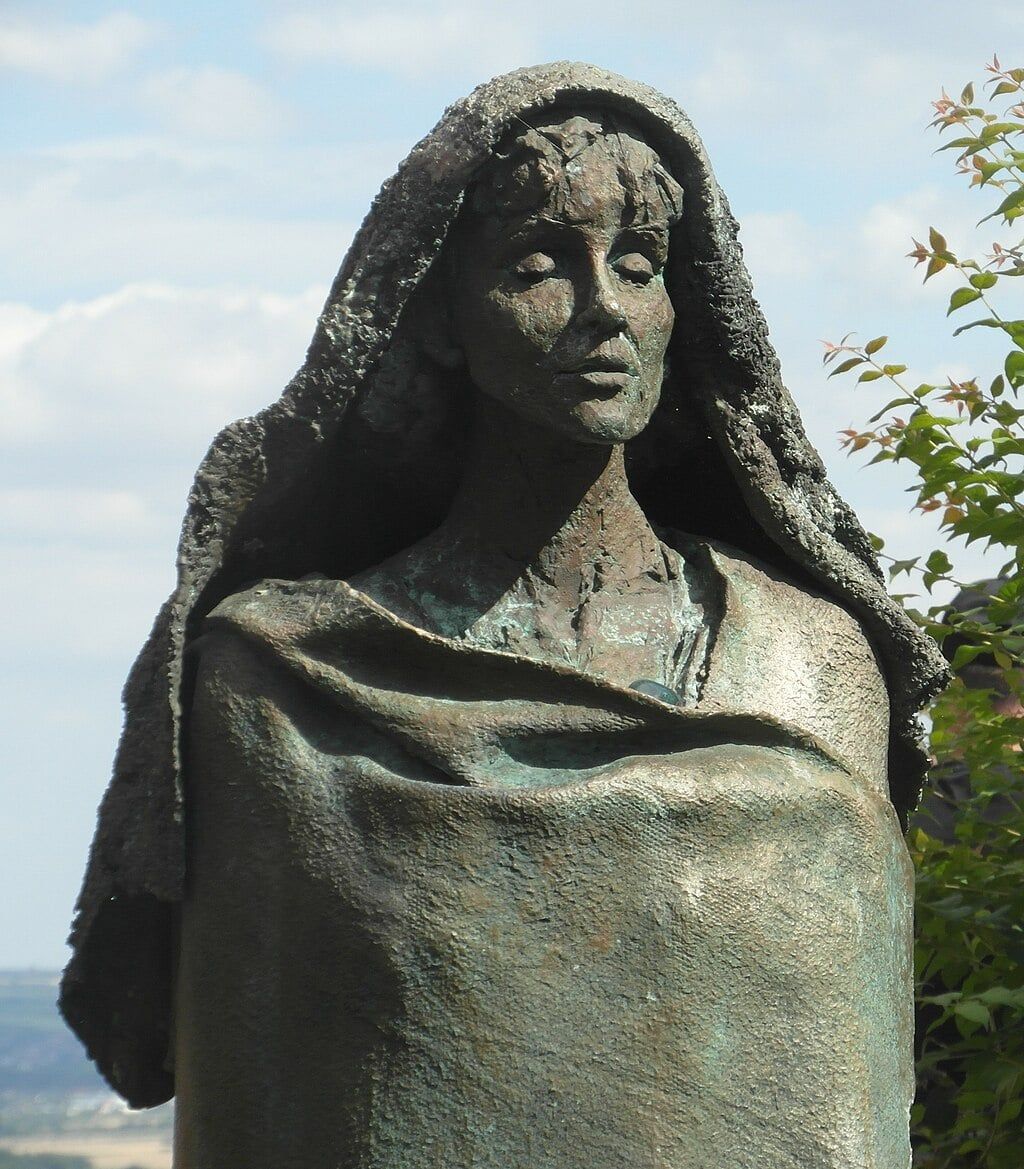
Photo Credit: Gerda Arendt -- statue of Hildegard created by Karlheinz Oswald
Hildegard: The Patron Saint of Creativity?
Creative thinking is needed in every aspect of our decision making, our relationships, and our daily lives
Film-maker Michael M. Conti has created several films and YouTube videos based on the 12th c. Benedictine nun, Hildegard of Bingen under the rubric “The Unruly Mystic”. Hildegard certainly was one! She was also one of the most creative individuals to ever live. Conti has even suggested she be made the “Patron Saint of Creativity”.
He has a point! Just look at what she accomplished: She wrote three books of her visions, two manuals on herbs and healing, and the first morality play. She composed the music for at least70 songs and wrote lyrics for them that stand as beautiful poetry. She is also believed to have overseen – if not done herself – much of the ground-breaking artwork that illustrates her manuscripts. While doing much of this, she was the abbess of one convent and the founder of a second one. She was also busy writing literally hundreds of letters, many of which launched pitched battles with men in high authority. As her fame grew, she also dealt with an ever-increasing number of pilgrims who sought her out for healing, and she even managed to undertake four lengthy preaching tours – something virtually unheard of for women in her day.
I wouldn’t hesitate to make her the Patron Saint of Creativity in my life because she represents not just creativity but inspired creativity. As you might know, when the ancient yogis wrote about the awakening of kundalini-Shakti, the divine feminine within, they said one of the main signs was the emergence of creative inspiration. One age-old text, for instance, states clearly that an enlightened yogi would be granted the talents of a poet. Another indicates these yogis would have words as sweet as grapes and honey dripping from their tongues.*
Hildegard’s output of this type of inspired creativity was remarkable not just because she was so busy, but because most of it occurred after she was 43 years old. She describes the mystical experience that triggered it much as yogis and mystics from other traditions have done:
"And it came to pass... that the heavens were opened and a blinding light of exceptional brilliance flowed through my entire brain. And it so kindled my whole heart and breast like a flame, not burning but warming....and suddenly I understood the meaning of the expositions of the books, that is to say of the psalter, the evangelists, and other catholic books of the Old and New Testaments."
In spite of this transformation in her consciousness, she did not begin to write. She was afraid. Even though she heard the words “say and write what you see and hear” from a voice she believed was God’s, she defied her inner desire to express herself. Eventually she fell so ill she was virtually lifeless. When she made the decision to write, she was cured.
It seems to me that there is a lesson in this for all of us....
* These texts are, respectively, Panchastavi and Saundaryalaharī
Upcoming Events
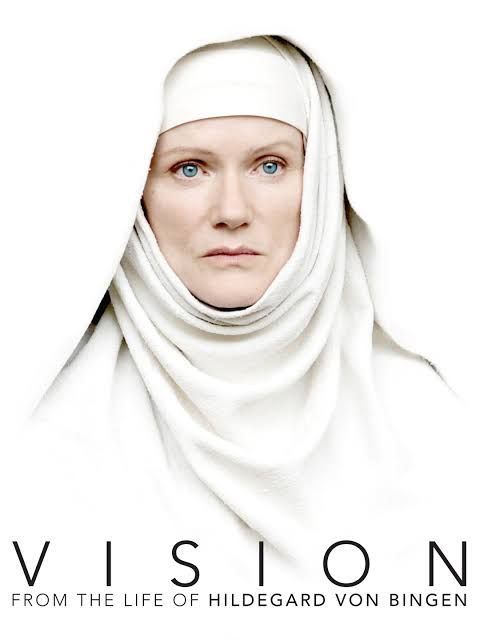
The Revue Cinema
Sunday, July 27, 12:30 pm
400 Roncesvalles, Toronto, ON
The Revue will be showing the film Vision, based on the life of St. Hildegard. I will do a short introduction to the film and a talk afterwards on her mystical experiences, her creativity, and her focus on the feminine divine.
For more information and tickets:
Spiritual Frontiers Fellowship
Thursday, August 7th, 7:00 p.m. EST
I will be doing an in-depth zoom presentation on kundalini. It will delve into what kundalini is and what it is not and why ancient ideas that come from yoga are so critically important for us today.
For info & registration: